


Advertisement

Prius Plug-In Hybrid: It Won't Compete With the Leaf or Volt

 
Follow John

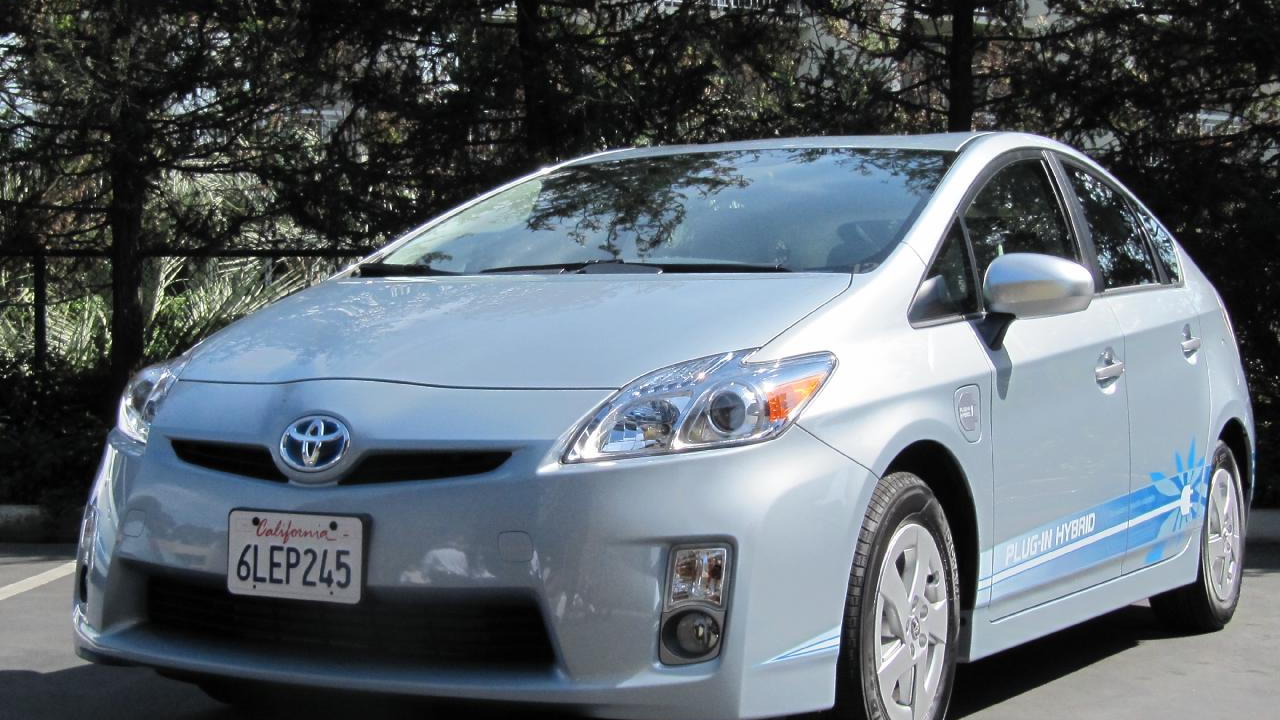
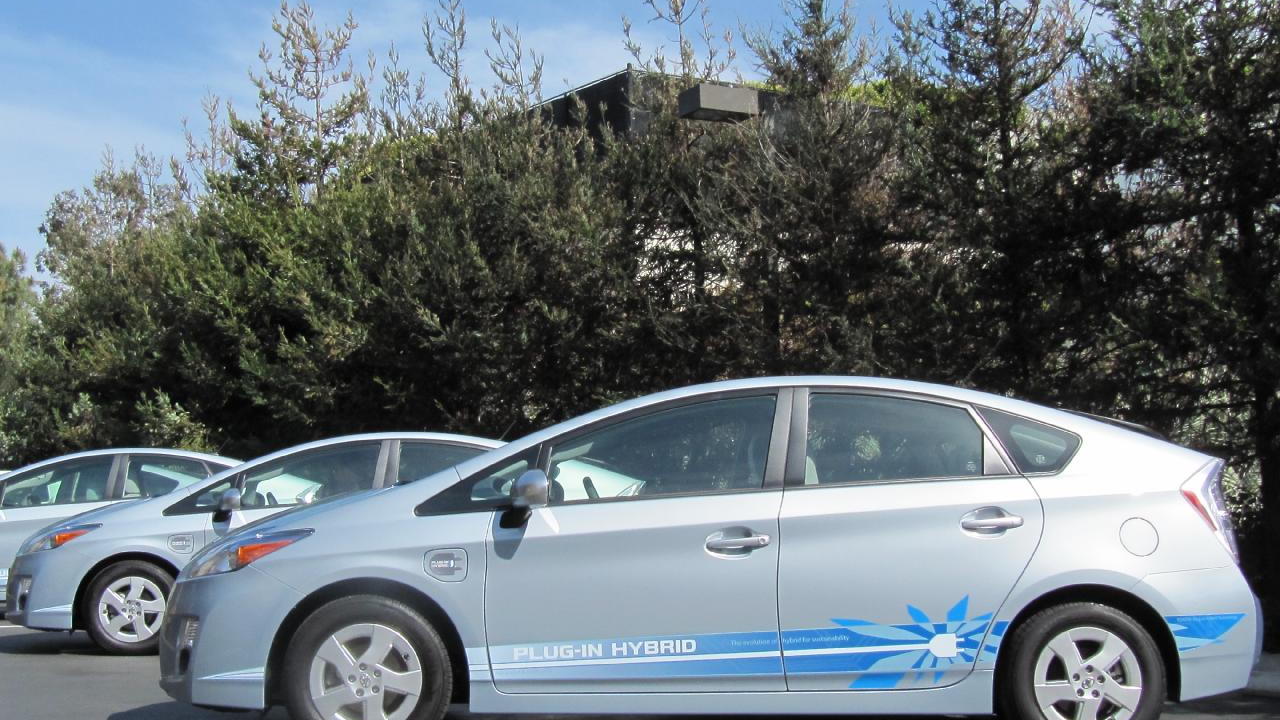
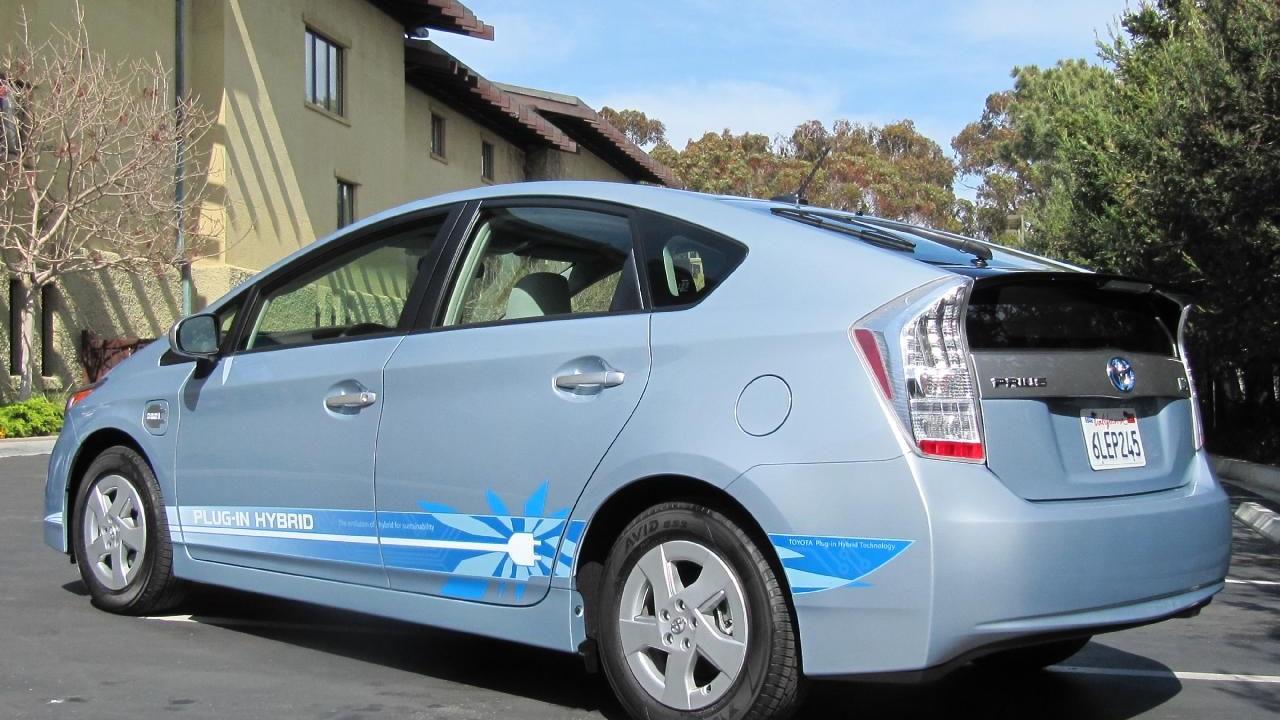
prototype 2012 Toyota Prius Plug-In Hybrid, April 2010

Related Photo Galleries


See more photos »
prototype 2012 Toyota Prius Plug-In Hybrid, April 2010

prototype 2012 Toyota Prius Plug-In Hybrid, April 2010

Enlarge Photo

We've been thinking a lot about the prototype 2012 Toyota Prius Plug-In Hybrid since our test drive of a prototype last month. And about the rest of the plug-in cars that will come to market over the next two years.

To our surprise, we decided we don't think buyers will directly compare the Prius Plug-In to such electric vehicles as the 2011 Nissan Leaf, the 2011 Chevrolet Volt, or the 2011 Coda Sedan.


Instead, we think the 2012 Prius Plug-In is simply going to be sold--and viewed by most buyers--as the top-of-the-line Prius.

It'll be the one with extra capability and more electric range, which will just happen to come from plugging it in to recharge it on grid power.

Why? Because the Toyota Prius is a known quantity, with a clearly defined image and a reputation for high gas mileage and Space Age styling. The Prius Plug-In looks and acts like a Prius with a bit more electric range, which is what it is.

Moreover, unlike the Leaf or the Volt, the Prius Plug-In's engine goes off and on as the car decides it needs to. The Volt is not a hybrid, remember: Its first 40 miles of electric range is continuous. That's not the case with the plug-in Prius.

Indeed, Toyota's Jana Hartline, who manages environmental communications, referred to the car as a "Prius on steroids." Her colleague Mary Nickerson, national manger for cross vehicle marketing, thinks of the Prius Plug-In she's driven for weeks as a "Prius Plus."

We think that may be an accurate way to characterize the car. It's worth noting that the metric Toyota stressed on our test drive wasn't electric range, but the percentage of total mileage done in electric mode--which over our 10-mile mixed drive was 63 percent.

Because it's so much like a standard Prius, and Toyota has stressed repeatedly that keeping the battery pack smaller and recharging it more often saves money, we expect the production car to come above the current $32,000 top of the Prius range--at, say, $35,000.

It will qualify for a Federal tax credit of slightly more than $2,500, based on pack size, far less than the maximum $7,500 for the Volt and Leaf, but enough to keep it within range of the wealthy buyers who choose Priuses instead of luxury cars.

With several plug-in cars going on sale during the next two years, carmakers are now starting to tune their marketing messages. Perhaps not surprisingly, the 2011 Chevy Volt may be pitched as the electric car without compromises--for which read "range anxiety."

Meanwhile, Toyota has built a total of 600 prototype Prius Plug-In Hybrids, of which 200 will be deployed in Europe and 150 in the U.S. The U.S. cars have now all been received and are being distributed to the fleets that will test them over the next year.

[Ward's]


Follow Us


Have an opinion?

  • Posting indicates you have read this site's Privacy Policy and Terms of Use
  • Notify me when there are more comments
Comments (7)
  1. I think it will compete with the Leaf and Volt in the sense that there are consumers who will choose to buy the PHEV Prius instead of the others. While we can easily see the distinctions in the various technologies, how the market ends up segmenting itself will be very interesting to see.
    I think PHEV Prius is a safe step for folks who are wary of making the jump to full electric, so it will effectively shrink the total market for LEAF and Volt.
     
    Post Reply
    Vote
    Bad stuff?

  2. Is driving the Prius PHEV as much of a soul-crushing experience as the current Prius? I think the Volt and Leaf will appeal to folks who actually like to drive their cars. I'm inclined to agree that the Prius PHEV's competition will primarily be the Prius.
     
    Post Reply
    Vote
    Bad stuff?

  3. Agreed that the PHEV Prius will compete with the gas version, as I see it selling mostly to folks who want a plug-in, and are either too loyal to Toyota or too cynical about GM to consider a Volt. I see it less competing with the Leaf, as they're on opposite ends of the plug-in spectrum: BEVs vs very low EV range PHEV.
    But, given the difference in the tax credits, it remains to be seen if Toyota prices it low enough to seem worth it. Net price may be fairly close to the Volt, which offers a potential zero-petroleum experience in daily commuting that the Prius won't be able to in most cases. And since real-world EV range will be so low in the PHEV Prius, there's a definite risk of consumers not reading the value of the technology at all.
     
    Post Reply
    Vote
    Bad stuff?

  4. I don't get the comment about "range anxiety" with the Volt... I would be MUCH more anxious about draining the batteries on the Nissan Leaf, which has no 2nd-stage gas engine to recharge the batteries on the go. The Volt may have a relatively short 300-mile range, but refills shouldn't be a problem. Also, the people who will get the most benefit from the Volt's technology will be those who mostly drive consistently shorter commutes that fall within its 40-mile electric-only range.
     
    Post Reply
    Vote
    Bad stuff?

  5. @CamaroFan: Maybe I didn't phrase it correctly. I was trying to say that the Volt will be pitched as the electric car for buyers who DO worry about range anxiety, because (as you note) it has a range extender and can be refilled with gasoline indefinitely. See my longer piece here:
    http://www.greencarreports.com/blog/1044805_2011-chevy-volt-marketing-theme-emerges-an-ev-for-road-trips
     
    Post Reply
    Vote
    Bad stuff?

  6. CamaroFan expresses perfectly the definition of range anxiety. This anxiety is only felt by those who haven't yet had the opportunity to drive a BEV. It's completely understandable, but it's also an anxiety that will melt away as these cars deploy in large numbers and people see their neighbors, friends and family driving BEVs every day with no problems.
    A lot of the anxiety stems from the lack of charging infrastructure. Today, you don't see any. But as you drive around, start imagining these chargers at your grocery store, the mall where you shop, the theaters you go to, restaurants, etc. Even where people work, there will be chargers. Some will be installed early in the program, others will come over the years as millions of plug-in cars are bought and demand grows for places to charge.
    This is how it's going to happen.
     
    Post Reply
    Vote
    Bad stuff?

  7. ......2011 Chevy Volt may be pitched as the electric car without compromises--for which read "range anxiety."......
    The counter argument would be - why is needing to use oil after 40 miles not a compromise ?
    Plugin Prius sounds like a hack rather than a proper design - but more the merrier.
     
    Post Reply
    Vote
    Bad stuff?


Have an opinion?Join the conversation!

Advertisement
Get great deals on the 2012 Toyota Prius!
By clicking above, you agree that your data will be subject to our Car Quotes Privacy Policy
Advertisement

Find Green Cars

Go!

Advertisement

 
© 2013 Green Car Reports. All Rights Reserved. Green Car Reports is published by High Gear Media. Send us feedback. Stock photography by Homestar, LLC.