New York City often startles people, and it stayed true to form in a recent analysis done by McKinsey & Company for the city's PlaNYC planning group, "Exploring Electric Vehicle Adoption in New York City."
In particular, one of the report's conclusions may come as a shock to many electric-vehicle advocates: It turns out you really don't need very many public charging points to get people to use EVs.
Over the next five years, the likely early adopters will simply adapt their behavior to the limitations of the EVs:
Early adopters do not appear to need a high-density public charging network. While the availability of charging at retail and curbside locations may be reassuring to the average driver concerned about range limitations, the study suggests that the earliest consumers will be willing to change their driving behavior and parking location, given their strong desire to purchase EVs.
Thus, a dense public charging network will not be a strong priority for early adopters.
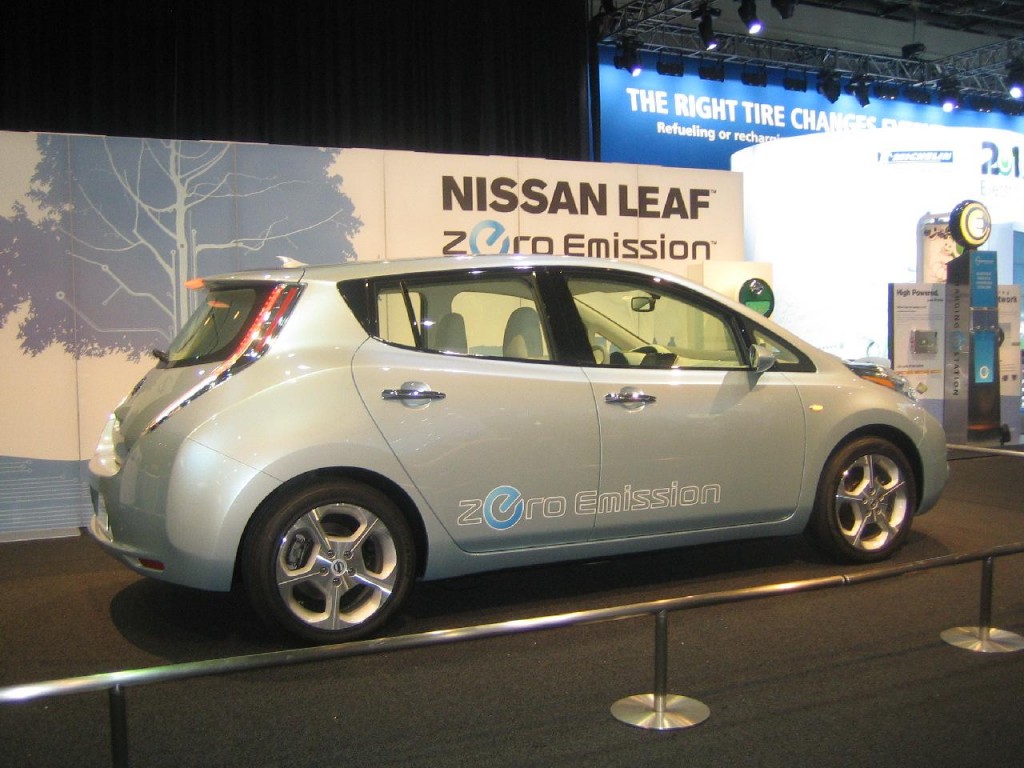
2012 Nissan Leaf, Electric Avenue, 2010 Detroit Auto Show
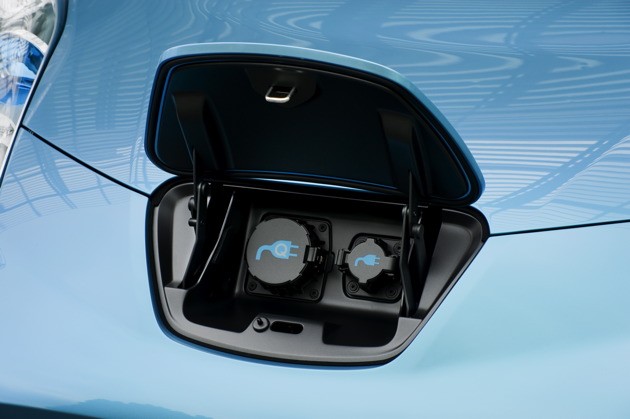
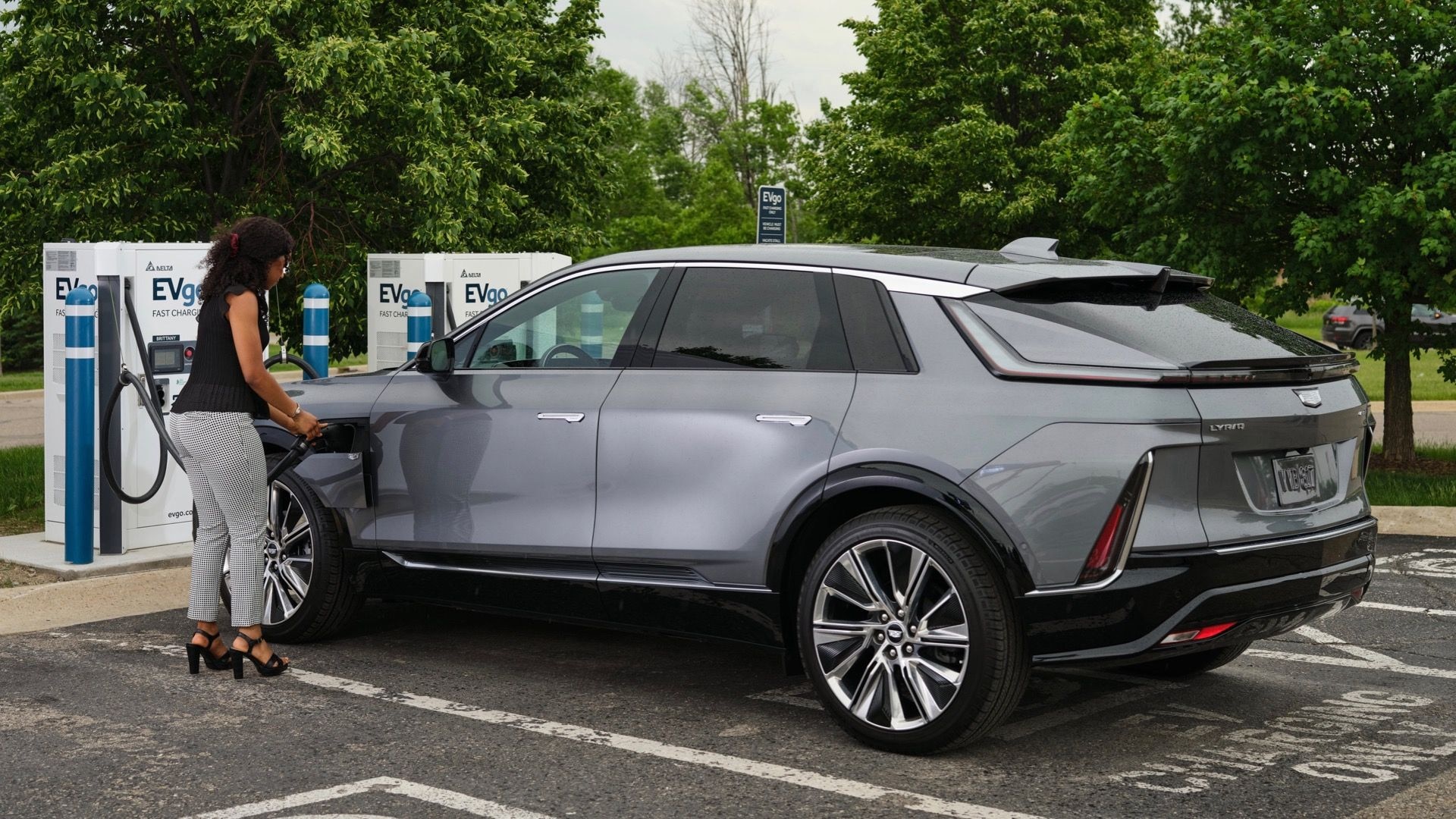
Nissan LEAF Charging Port
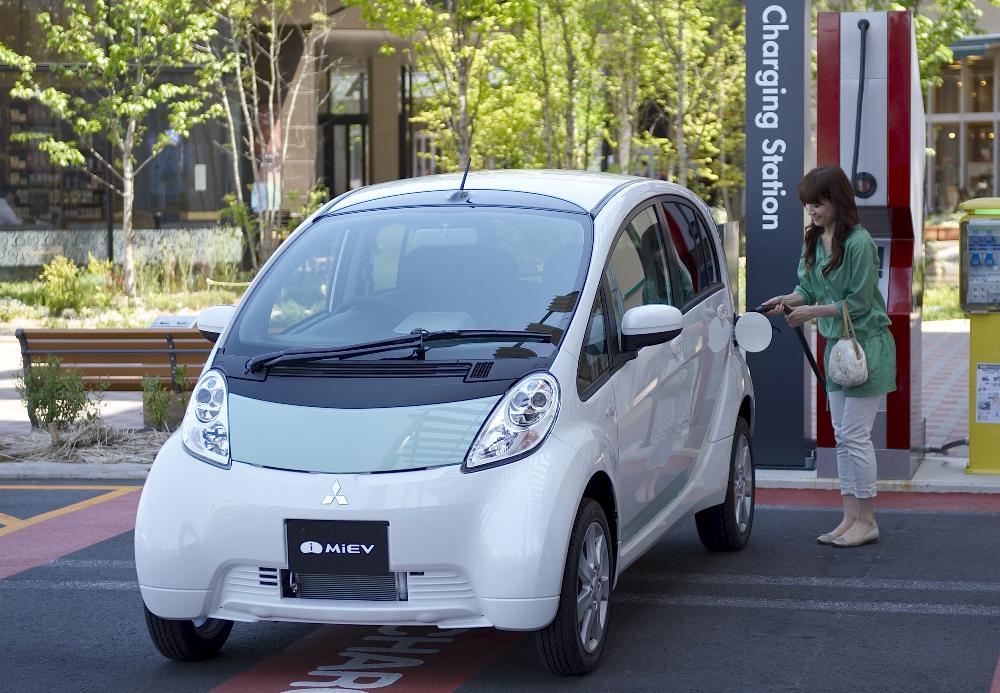
Mitsubishi i-MiEV electric car at quick charging station

PlaNYC: Exploring Electric Vehicle Adoption in New York City, January 2010, report cover
Needed: easier installation
Instead, it makes more sense to help those early adopters by streamlining the process for installing charging equipment in their homes, apartment buildings, or local garages:
Given the likely strong demand among early adopters and the limited short-term supply of vehicles, initial actions would be most effective if they focused on helping early adopters enter the EV market.
Survey respondents ... voiced a desire to have a convenient and easy-to-understand process to install necessary charging equipment, at home or in a commercial garage.
"Range anxiety"
This counterintuitive conclusion flies in the face of the received wisdom, which says drivers will avoid using electric cars unless they can be sure there are public quick-charge stations available wherever they may need them, because "range anxiety" makes them nervous that they'll run out of juice and be left stranded.
But at least some EV advocates and urban planners who are now sketching out local and regional networks of EV infrastructure think the report is right on target. People quickly learn their electric car's range, they say, and pick the appropriate vehicle for the day's travel.
In multi-car households, many drivers will take a compact car to deliver a kid to school or commute to work. But if there's sports practice after school that requires hauling six teenagers, they'll take the family minivan instead.
For "compact car," substitute "electric vehicle," and you see how it works.
100 miles enough
Sure, things come up unexpectedly. But in cities and suburbs, it's very rare that short local hops suddenly change to trips of more than 100 miles--the stated range of the upcoming all-electric 2012 Nissan Leaf, to pick one example.
And the "range anxiety" concern is only relevant for battery-electric vehicles; both extended-range EVs like the 2011 Chevrolet Volt and plug-in hybrids like the 2012 Toyota Prius Plug-In offer hundreds of miles of range, using their gasoline engines for longer distances.
Demand exceeds supply 'til 2015
Among the report's other conclusions:
- A large group of early adopters will change their behavior to accommodate the limits of early electric vehicles;
- The number of those early adopters is greater than the likely supply of EVs until at least 2015;
- It won't be necessary to provide tax incentives or other subsidies to these early adopters, but they would like to be recognized;
- Charging electric vehicles poses no threat to the stability of the electric grid as long as it's mostly done off-peak (at night); and
- Collaboration among the City of New York, electric utilities, and automakers will be required to make it all happen.
The full 24-page report, prepared under the auspices of the Mayor's Office of Long-Term Planning & Sustainabilityi, can be downloaded from the PlaNYC 2030 section of New York City's website.
[NYC.gov]