Advertisement

Why Can't We Buy Small European Diesels in the U.S.? Page 2

 
Follow John

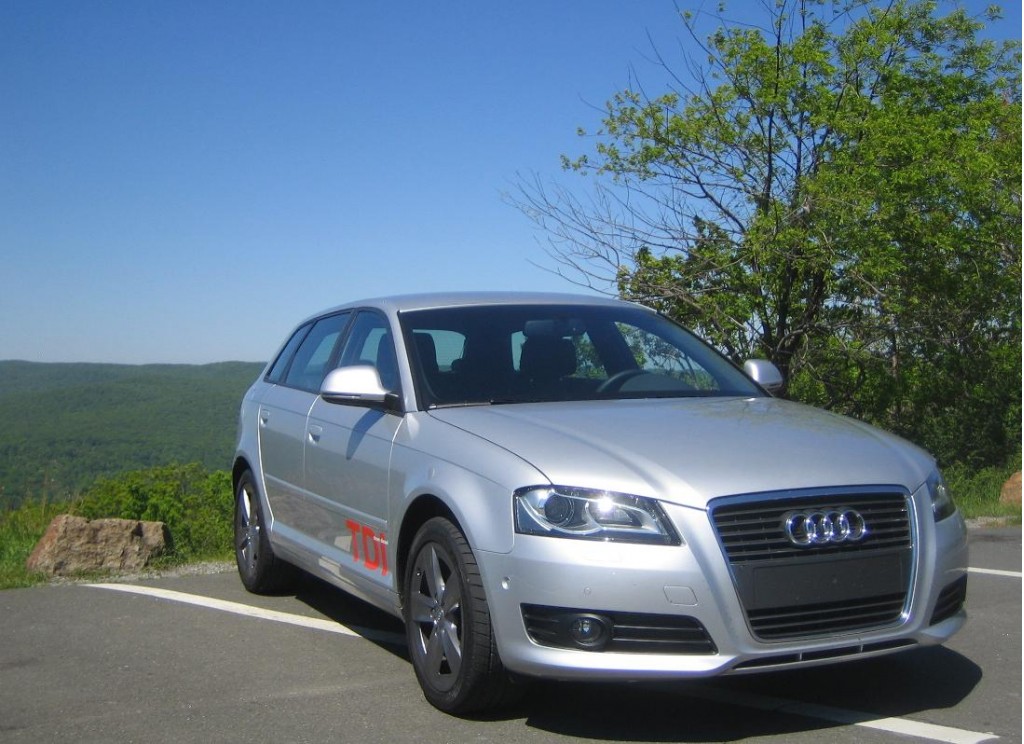
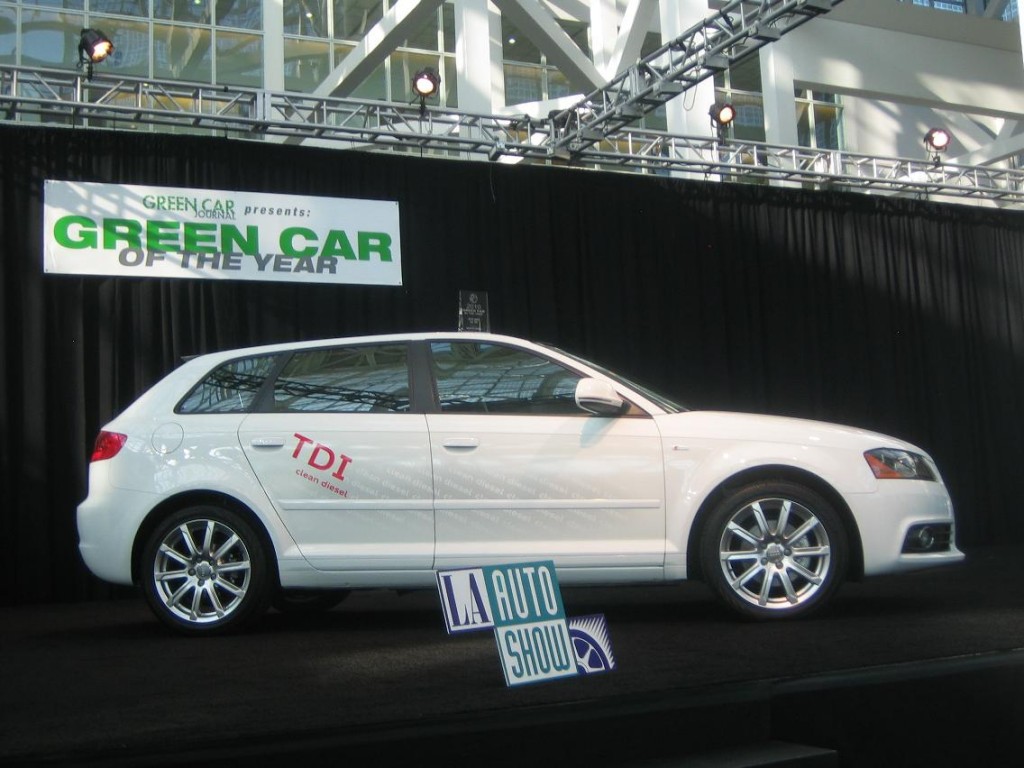
2010 Audi A3 TDI named Green Car of the Year, 2009 LA Auto Show

2010 Audi A3 TDI named Green Car of the Year, 2009 LA Auto Show

Enlarge Photo

Audi A3 TDI clean diesel - European model

Audi A3 TDI clean diesel - European model

Enlarge Photo

VW and Mercedes lead


Right now, diesels are offered in the U.S. by longtime diesel makers Volkswagen and Mercedes-Benz, plus newbies Audi and BMW.  We think VW may have the big diesel winner in its new 2010 Volkswagen Golf TDI.

The Japanese makers have now pulled way back on diesel projects. Nissan, Honda, and Subaru were all working on small diesels they planned to launch in the U.S. market during the 2009 and 2010 model years, but none has current plans to offer them.

Audi optimistic

Audi is on a roll with its diesels right now. Its 2010 Audi A3 TDI won the Green Car of the Year award at last week's Los Angeles Auto Show and in November, the TDI model made up 43 percent of A3 sales--all 391 of them.

While it projected the TDI diesel model to be 15 percent of its 2010 Audi Q7 sport utility sales, Audi president Johan de Nysschen says dealers can't keep them in stock, and they now represent 46 percent of orders. Audi has sold 6,600 Q7s so far this year.

Chance come and gone?

We tend to think that diesel had its chance two years ago when gasoline prices spiked. But diesel spiked even MORE then; remember $5/gallon diesel?

So while we expect clean diesels to grow in market share, it'll be a slow, slow process.


Follow Us


Have an opinion?

  • Posting indicates you have read this site's Privacy Policy and Terms of Use
  • Notify me when there are more comments
Comments (18)
  1. "Even without U.S. equipment, the Ford Fiesta Econetic costs $31,000 in Europe; the U.S. 2011 Fiesta costs $14,000 to $23,000."
    I hope that's 31k Euros and not 31k US. As anyone who writes about cars these days know you can't 1:1 compare Euro/Dollar prices on cars like that.
     
    Post Reply
    Vote
    Bad stuff?

  2. Diesel and gas engines are antiques. When the governments and multinationals stop suppressing inventions and new technology, you'll be able to fill up your car with H2O and run on it all day.
    We're being scammed by the fossil fuel cartel. They should have been shut down a long time ago. They're now working on batteries that never run down and never need recharging. Just add water.
    We're being scammed. I want my flying car.
     
    Post Reply
    Vote
    Bad stuff?

  3. It's cost/benefit calculation. The european system that taxes diesel far less than gasoline (originally intended for the commercial trucking industry) has created a perverse demand for diesel passenger cars. For europe, cost/benefit works out. For the US, not right now.
     
    Post Reply
    Vote
    Bad stuff?

  4. I will shoot the messenger. You seem to play back anti-diesel comments from only American automakers. The Euros will tell you quite differently.
    "They're too dirty." Really. I guess this is why diesel has won the "Green Car of the Year" award two years running (VW Jetta TDI, 2009; Audi A3 TDI, 2010).
    The cost of after-treatment combined with a diesel powertrain remains the same or less than hybridizing a conventional vehicle like a Toyota Camry or Ford Escape.
    The cost of diesel fuel relative to the overall cost savings -- due to better engine efficiency -- can be proved by actually doing the math. See www.dieselforum.org for a cost calculator to make the point.
    All these excuses for not bringing more diesel to the U.S. market add up to the same old reason why American automakers remain in trouble: they underestimate the American car-buying public. Give people a real choice and more times than not they will make a smart decision.
     
    Post Reply
    Vote
    Bad stuff?

  5. •Diesels emit far less carbon per mile traveled (true)
    •U.S. standards require diesels to be far too clean, and Americans are irrational about emissions (you decide)
    The above statements are TRUE...California does not have standards that truly address real emissions per mile driven on one gallon of diesel. A matter of politicians pretending to be engineers.
    The failure of American hybrid/economy auto purchases will be blamed on the consumer rather than California and the manufacturers.
    More and more truly economical autos will come from overseas and further ruin the American auto economy.
     
    Post Reply
    Vote
    Bad stuff?

  6. I've been driving Diesel cars since the early 80s, and I've driven in every US state except Hawaii, and all the Canadian provinces except PEI & Newfoundland. I have never had an issue finding a station with Diesel. I have only had to fill up at a "truck island" twice in the past 20 years, and both of those times were in the early 80s. These statements about Diesel in North America are myths. Pure and simple.
    Another fact about Diesel is that it takes less (displacement) to do the same job. Compare cars that offer both power gas and Diesel power plants: I drive a VW Jettaand my wife drives a Jeep Liberty. My car has a 1.9 liter TDI, and averages 50 MPG. The Gasoline Jetta has a 2.5L engine and gets 25 MPG. The Jeep Diesel is a 2.7Liter engine and gets 29 MPG. The gasoline Liberty is 3.6 liters and turns a pathetic 17 MPG.
    Less is indeed more with Diesel.
    --Chuck
     
    Post Reply
    Vote
    Bad stuff?

  7. Be patient, grasshopper. They're on their way. Audi, VW, and BMW have it nailed. Watch what Fiat does, as well as PSA if they hook up with Mitsubishi.
     
    Post Reply
    Vote
    Bad stuff?

  8. It would be helpful to explain to us dinosaurs... so why, if they're so clean, do diesel engines stink so much more than gasoline-combustion vehicles?
     
    Post Reply
    Vote
    Bad stuff?

  9. jimbob said: "... so why, if they're so clean, do diesel engines stink so much more than gasoline-combustion vehicles?"
    Clearly, you don't know what you're talking about. If you have ever stood behind a new (model year 2009 and newer) diesel vehicle, you would realize there is no stink, smoke or "typical" clatter so common in older diesel models. Another myth down the drain.
     
    Post Reply
    Vote
    Bad stuff?

  10. "Even without U.S. equipment, the Ford Fiesta Econetic costs $31,000 in Europe; the U.S. 2011 Fiesta costs $14,000 to $23,000."
    How did the author get to $31,000? Here is a way to find the price of a diesel. Go to www.ford.co.uk and configure a Fiesta with the different engine options. The difference between the standard 1.4l gas and a 1.4 diesel is 600 pounds. The top end diesel 1.6 Duratorq+DPF+TDCI is 1350 pounds more than the 1.4 gas. Total car price is 3,895 pounds = $22,540 for 76.3 combined mpg (imperial gallon about 20% more than US gallon).
     
    Post Reply
    Vote
    Bad stuff?

  11. The US Tier 2 Bin 5 emissions requirements are significantly more rigorous than the current Euro 5 standards with respect to NOx emissions NOT particulates. Both regions are about at parity with respect to the size and volume of allowable particulate emissions.
    The next round of emissions rules will focus on CO2 and those start being phased in by mid-decade.
     
    Post Reply
    Vote
    Bad stuff?

  12. Your comments are somewhat off the mark.
    1. Diesels are more costly. yes they are but they also last at least a 100,000 miles longer then gas engines. they also need less maintenance. And the new Euro regulations are not all that much different then the one in the USA.
    2. Cheaper diesel in Europe compared to gas. Yes, but many European countries also have a diesel tax on the car. In my area it is about a 800 dollars a year.
    3.Diesel not offered in 50% of gas stations. In most stations there are 3 different octane ratings of gasoline offered. 2 would be enough. keep the high and low test gasoline and use the mid octane for diesel.
     
    Post Reply
    Vote
    Bad stuff?

  13. Hey bill gas stations don't have a seperate tank for mid-grade. Low octane gas and high octane gas from the seperate tanks are mixed while being pumped and that's how mid grade gas is made and sold.
     
    Post Reply
    Vote
    Bad stuff?

  14. I think the EPA needs to lighten up on NOX emissions. The Honda Insight 2000-2006 models used "lean burn" changing the fuel ratios from 14:1 to 26:1 under lighter load conditions, giving a huge boost to fuel economy. True, more NOX is produced, but outside of a large city (or Europe) this would be acceptable. If most ultra low emission type vehicles were allowed to do this, it would result in a huge fuel savings. In fact, my Prius engine runs a lot of time, just to keep the catalytic converter up to temperature, which wastes a lot of fuel.
     
    Post Reply
    Vote
    Bad stuff?

  15. Cost/benefit? COST/BENEFIT!!?? There is no way to recover the cost of a Prius purchase when you consider the average return on investment of a gas equivalant (say, a Corolla) would be about 15 YEARS! I would much rather have a diesel than an electric car. The carbon footprint to build a Prius is HUGE (Batteries, Rare earth metals, Copper) No one talks about it because the "green" establishment doesn't want their apple cart upset. Not to mention most people don't keep a car even 5 years to pay off a loan. And we haven't even mentioned the cost to replace batteries and the labor (licensing, training, hazmat disposal of used batteries, transportation, etc, etc) to do so.
     
    Post Reply
    Vote
    Bad stuff?

  16. Specialized Hybrid power trains instead of Diesels allow the auto manufacturers a 15-20% greater profit margins and dealers a guaranteed 15 year parts and maintenance contract. No body wants to upset that apple cart. Big Oil certainly wants you to buy more of their product. And who writes the Laws? The Public? Guffaw...Ever notice that the politically powerful Railroads are unaffected by emissions? And why would Chrysler choose to sell high mark-up luxury 15 MPG diesel pickups, but not the Fiat line of low-mark-up economy 70 MPG turbodiesels? The LAWS are written to protect BUSINESS profits.
     
    Post Reply
    Vote
    Bad stuff?

  17. As there is such a massive discrepancy between gas prices between the U.S and Europe, Americans have traditionally gone down the gasoline-alley. For years I remember a gallon of gas costing around 92cents per gallon while its European/imperial counterpart was costing at least quaduple that, albeit for a 20%larger fill. So You saw gas engines (struggling to power) massive trucks, stationary generators, agricultural tractors and dinosaur-sized cars. In recent years Americans have seen the folly of this practice, throwing/squandering the precious fuel like it was no more value than horse-piss. Still...You (Americans that is,) have issues (no pun intended) with using diesel power in small to compact cars. Don't you people want to achieve 50-70?
     
    Post Reply
    Vote
    Bad stuff?

  18. m.p.g.? When you consider the horrendous mileages you cover...for all the neurosis about emissions, DIESELS BURN CLEANER...there are no high-tension electrics to worry about, most people can do their own maintenance (oil, fuel and air filters and a change of oil...!)
    These engines are much stronger to cope with the compression-ignition system so subsequently last 40% 60% longer than gas engines and, you don't have to be a truck driver to appreciate the added bonus of "torgue." Great if you live in a mountainous area. It really is time to move on from "Diesels are dirty, smelly neurosis...and while you are all at it: forgive G.M. for their brief and disastrous flirtation with "dieselising" V8 gas engines circa 1979-1985. Move on people!
     
    Post Reply
    Vote
    Bad stuff?


Have an opinion?Join the conversation!

Advertisement
Advertisement

Find Green Cars

Go!

Advertisement

 
© 2013 Green Car Reports. All Rights Reserved. Green Car Reports is published by High Gear Media. Send us feedback. Stock photography by Homestar, LLC.