It's a sad thing when an auto show loses its exhibitors, and this was a tough year for Tokyo.
Foreign automakers shunned the show--unless you count England's Lotus--so the biannual event had pretty much only Japanese products on display.
Despite the downsizing, green cars abounded, ranging from new production models like the 2012 Nissan Leaf electric car to concepts pointing the way toward even greener offerings for future hybrids and electric-drive vehicles.
Here's the GreenCarReports.com rundown of everything worth noting from last week's press days at the 2009 Tokyo Motor Show. Regular readers will note we've covered many of them before, keeping you current on all things green and auto-related.
2009 Tokyo Motor Show: Production Cars
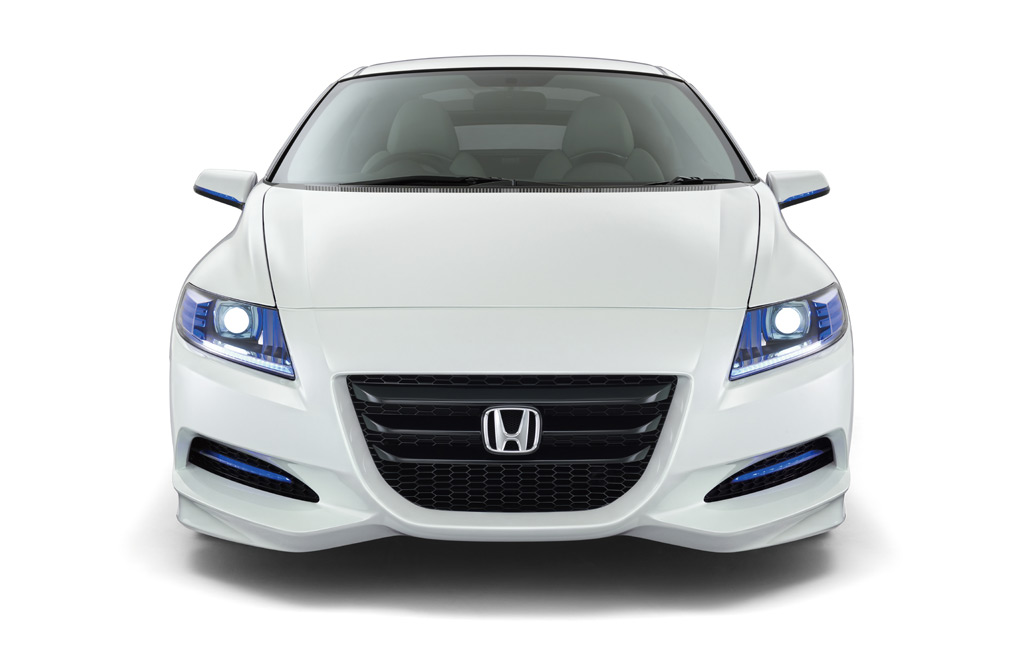
2011 Honda CR-Z Hybrid: The CR-Z sports coupe, the spiritual successor to the much-loved and highly fuel efficient 1983-1991 Honda Civic CR-X, has had a particularly long gestation. It was first shown as a concept back at the 2007 Tokyo Motor Show.
The version shown this year, however, is very close to the production version that will go on sale in Japan next February. We should see that car arrive in the U.S. next spring, after making its debut at the 2010 Detroit Auto Show.
Like the CR-X all those years ago, the CR-Z will use a 1.5-liter gasoline engine. This time, however, it'll be fitted with Honda's mild-hybrid Integrated Motor Assist system, paired to a six-speed manual gearbox, the first ever in a hybrid car.
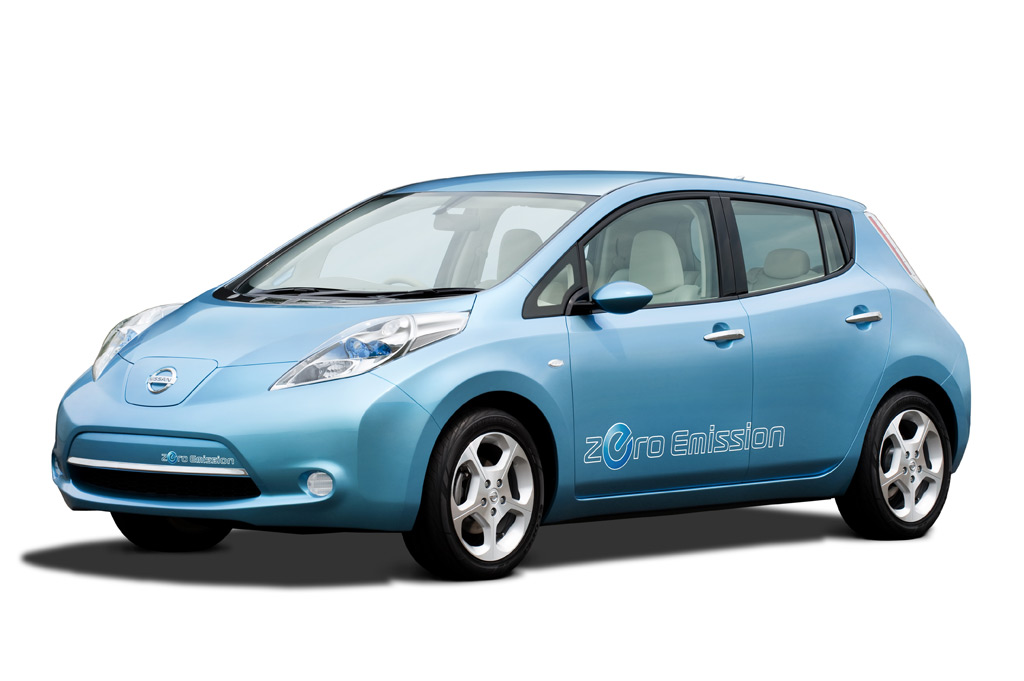
Nissan LEAF electric vehicle
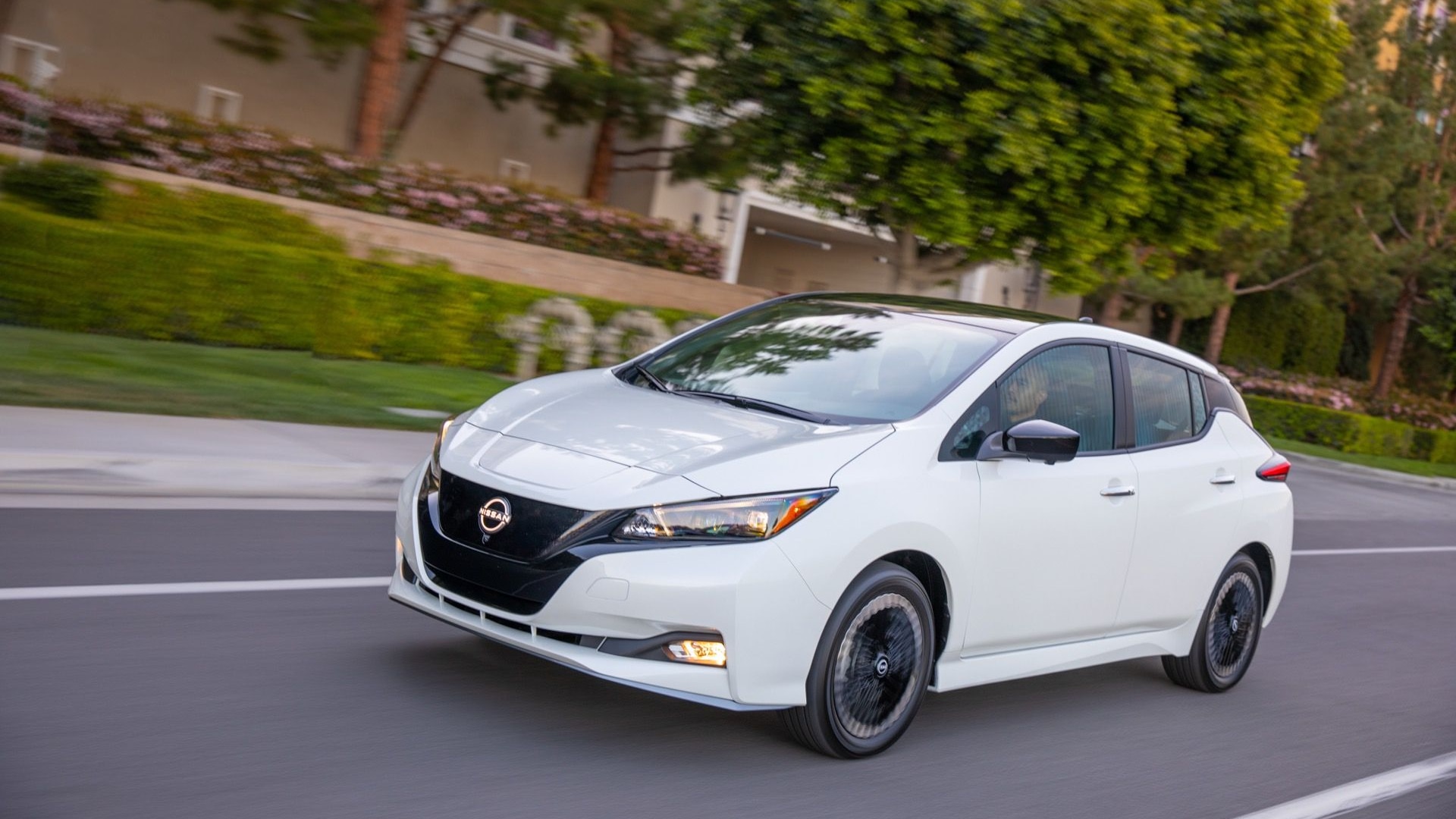
2012 Nissan Leaf: The 2011 Chevrolet Volt didn't appear at the Tokyo Motor Show, but if it had, it would have been fascinating to see it side-by-side with the 2012 Nissan Leaf.
Why? Both are five-door hatchbacks, and they're also the first two plug-in vehicles from major global automakers to go into mass production.
But they take very different approaches to driving on fuel from the electric grid. The Volt battery pack gives 40 miles of range, and a gasoline engine "range extender" switches on for longer trips, giving range up to 300 miles.
The 2012 Nissan Leaf, on the other hand, is a pure electric car with a 100-mile range from a full charge of its 24-kilowatt-hour lithium-ion battery pack. Power is delivered to the front wheels by an 80-kilowatt (108-horsepower) electric motor.
That's enough to cover the daily driving of far more than 90 percent of U.S. drivers, even before a network of public charging stations arrives. We were impressed with our test drive of the 2012 Nissan Leaf powertrain.
How buyers react is a big question, though, as is the cost. Nissan hasn't yet said how it will price the Leaf; it may offer the car at a base price around $25,000 and lease the battery pack separately.
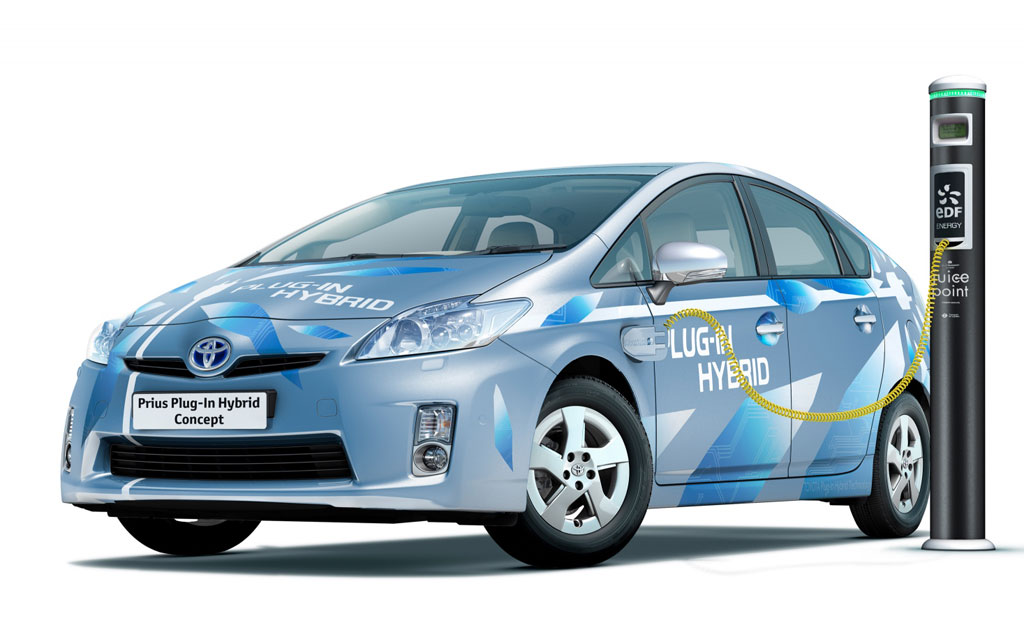
2010 Toyota Prius Plug-in Hybrid Concept
Toyota Prius Plug-in Hybrid: Toyota is the undisputed global leader in hybrid-electric cars, having built roughly two-thirds of the 2 million hybrids now on the world's roads. But the company has been slow on plug-in vehicles, frequently criticizing the technology as impractical and insufficiently reliable.
Nonetheless, private owners and fleets have now converted almost 1,000 Priuses to plug-ins, and Toyota is now following suit. The company will build 500 plug-in Priuses with lithium-ion battery packs, a more advanced technology than the nickel-metal-hydride used in all standard Prius models.
Importantly, unlike "series hybrids" that include the upcoming 2011 Volt and the 2010 Fisker Karma, the Plug-In Prius does not run entirely in electric mode until its pack is depleted before switching on its engine.
The plug-in system just extends the range and speed of the Prius all-electric mode, continuing to switch the engine on and off as it deems necessary.
Those cars will go only to commercial fleets, with 150 each to the U.S. and Europe and the balance in Asia. First deliveries will start before the end of the year, but Toyota isn't committing to an on-sale date for actual retail customers.
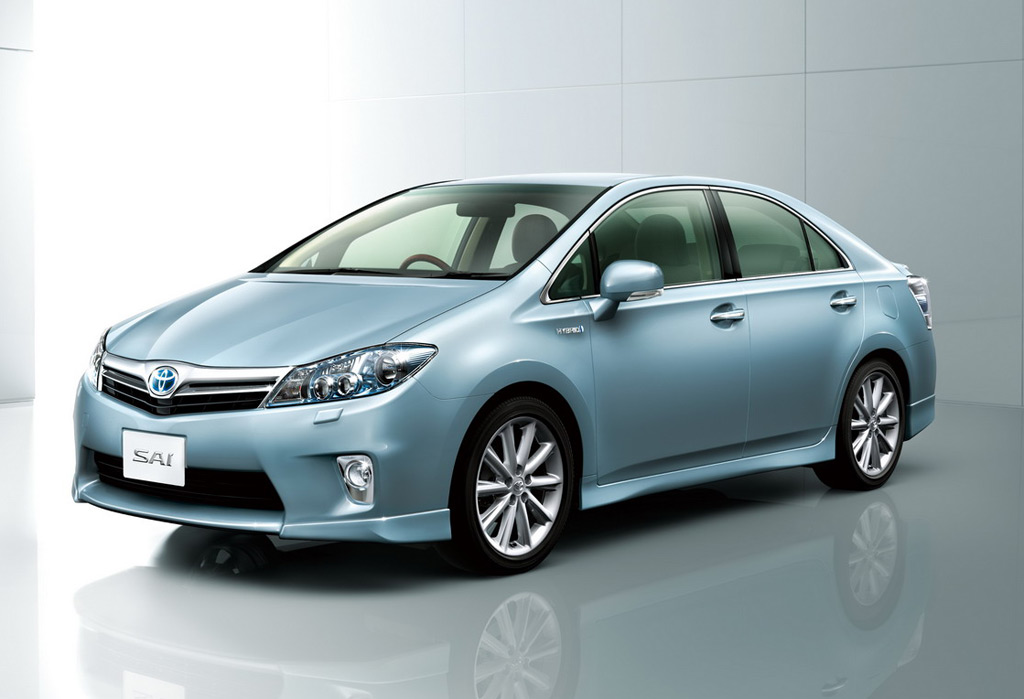
2010 Toyota Sai Hybrid
Toyota Sai Hybrid: For the Japanese market, Toyota is offering the car we know here as the 2010 Lexus HS 250h under the Toyota Sai name. Badging aside, the two cars are largely identical, with the Sai sitting above the Prius in the Japanese hybrid lineup.
Despite Toyota's plans to add additional body styles to the Prius, there don't seem to be plans for the Toyota Sai to be sold here in the States. It would be too close to the Lexus, which is loaded with 600 pounds of extra luxury features and offers somewhat less striking fuel efficiency (about 35 miles per gallon) as a result.
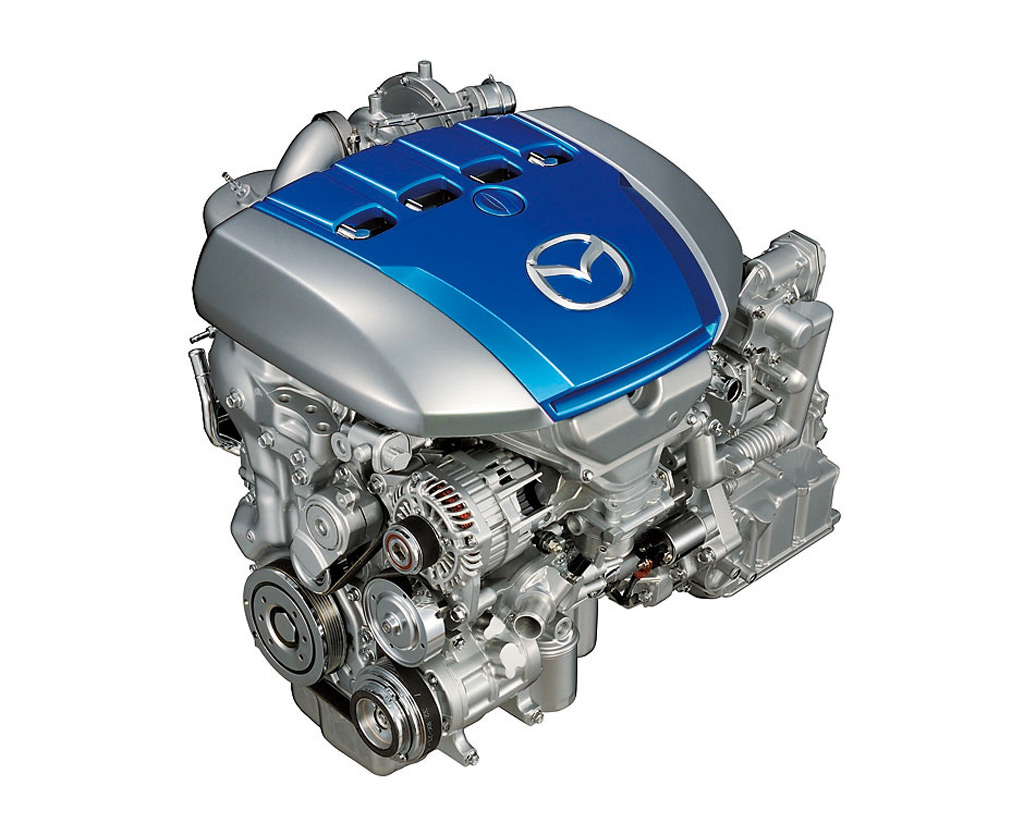
Mazda SKY-G gasoline direct injection engine
Mazda SKY Next-Generation Engines: Not every green vehicle at Tokyo used a battery pack, though. Mazda, makers of sporty small and midsize sedans and hatchbacks, showed off a collection of gasoline and diesel engines and an advanced automatic transmission under the "Sky" name.
By 2015, the company has set a goal of raising fuel efficiency in its vehicles 30 percent or more over its 2008 levels. But Mazda has little experience with electric drive technology; it may even use Ford hybrid and electric car technologies to jumpstart its own efforts.
2009 Tokyo Motor Show: Concepts
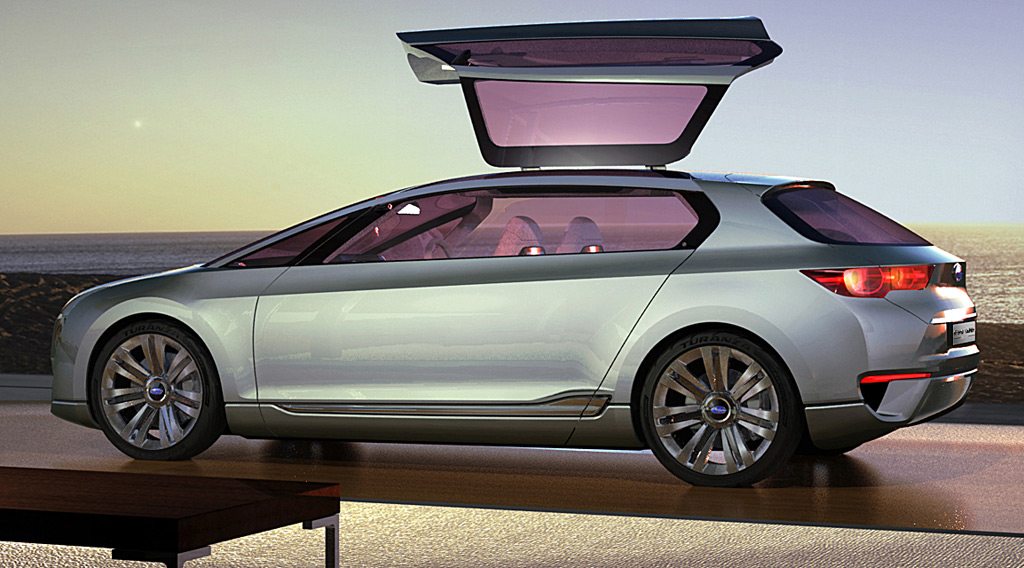
2009 Subaru Hybrid Tourer Concept
Subaru Hybrid Tourer Concept: Despite its sturdy, outdoorsy image in the U.S. market, Subaru too has been slow to incorporate hybrids into its lineup. Latest reports say it will offer a hybrid in one of its smaller vehicle lines for 2012.
The Hybrid Tourer concept it unveiled at Tokyo incorporates Subaru's legendary symmetrical all-wheel-drive and horizontally opposed "boxer" engine. Its lines are sleeker than recent designs from Subaru, though, and its sporty styling almost hints at four-door coupes like those from Mercedes-Benz, BMW, Volkswagen, and others.
The gull-wing-doored concept uses an electric motor on each axle to supplement the mechanical drive provided by a 2.0-liter "boxer" four-cylinder engine with direct injection and a turbocharger.
That engine is mated to a hybrid system derived at least in part from Toyota's Hybrid Synergy Drive. Toyota now owns a portion of Subaru, and the two have been integrating their electric-car and hybrid efforts for a couple of years now.
Subaru put an electric version of its Stella mini-car on sale this summer, but that vehicle is thus far limited to the Japanese market.

2009 Mitsubishi Concept PX MiEV
Mitsubishi Concept PX-MiEV Plug-in Hybrid: With its clever i-MiEV electric mini-car now on sale in Asia and Europe, Mitsubishi has gained quite a lot of attention for its efforts in electric cars.
Its latest concept is a plug-in hybrid all-wheel-drive midsize sport-utility vehicle, the Concept PX-MiEV, that is widely thought to preview the next generation of its Mitsubishi Outlander crossover.
It uses a new and proprietary plug-in hybrid architecture that incorporates the company's trademark Super All-Wheel-Control (S-AWC) system, along with such software wizardry as electronically limited yaw control.
More importantly, Mitsubishi expects to put plug-in hybrid vehicles on sale by 2013 that incorporate the system, which will be used in most future models--including the high-volume Lancer compact sedan.

2009 Mazda Kiyora Concept Update
Mazda Kiyora Concept: Not only did it introduce a new line of far more fuel efficient "Sky" engines (see above), Mazda also showed off one of them in a new and highly styled compact concept.
The Kiyora is an "eco-friendly" three-door hatchback powered by the new 1.3-liter Sky-G gasoline engine and six-speed Sky-Drive automatic transmission, along with Mazda's idle-stop system, known as i-Stop, that shuts off the engine when the car isn't moving.
This combination gives the Kiyora an estimated gas mileage of 75 miles per gallon on the Japanese test cycle.
Will we see the Kiyora on U.S. streets? Well, Mazda has already announced that it will launch its 2011 Mazda2 subcompact in the U.S. next year. At Tokyo, it compared the Kiyora to the Mazda2, but noted that it is 220 pounds lighter. Sounds promising to us.
Stay Updated on Green Car News!
Subscribe to our GreenCarReports RSS Feed
Twitter: @GreenCarReports
--------------------------------
Write your own car blog at High Gear Media! Sign up to write and tell car enthusiasts and shoppers what you think about your vehicle or today's car news and get published to High Gear Media sites like AllSmallCars, LexusReports, FamilyCarGuide and more!