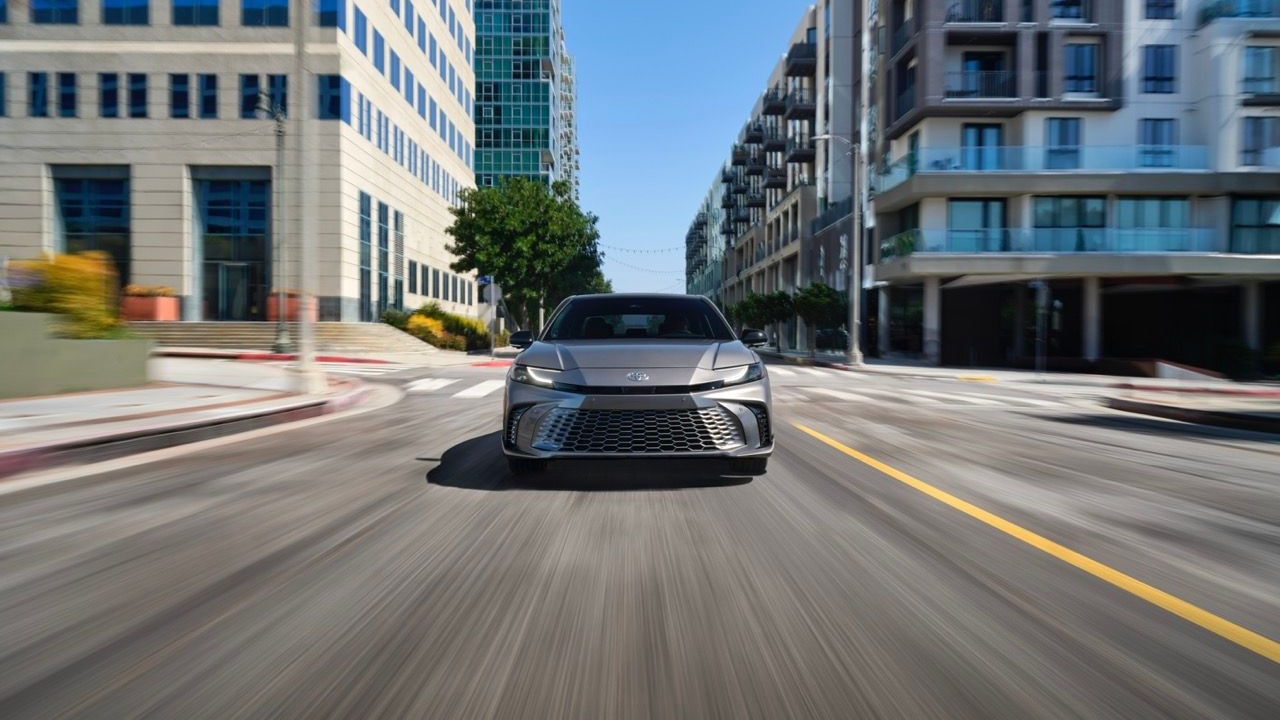
Your car already runs on (some) ethanol, although you may not know it. Much of the gas sold in the U.S. is now actually a blend: 90 percent gasoline, 10 percent ethanol. It's known as E10, for the percentage of the total derived from the corn-based biofuel.
Since 1978, new cars have been able to handle that amount of ethanol. Now, automakers are expressing alarm that the EPA may increase the permissible ethanol in standard, everyday "gasoline" to 12 or even 15 percent.
December decision
The U.S. Environmental Protection Agency (EPA) has to decide by December 1 whether to approve a request that it increase the amount of ethanol allowed in gasoline to as much as 15 percent. The agency would be required to grant the request under a Senate measure submitted by Ben Nelson (D-NE) and other senators from agricultural states.
The Alliance of Auto Manufacturers, which represents seven makers who build cars in the U.S., has urged more research on the effects of increasing ethanol. Among other issues, they're concerned about the short deadline, since they've already tooled up for the engines used in their 2010, 2011, and even 2012 models.
Having to make last-minute changes to accommodate new fuels would cost them money that most would very much rather not spend.
Snowmobiles, power tools, boats, oh my!
Makers of other engines--including those used in boats, motorcycles, snowmobiles, all-terrain vehicles, and even power equipment--echo the carmakers' concerns. The measure is even opposed by the Union of Concerned Scientists.
The engine makers have joined with the oil and ethanol industries, plus the Department of Energy and EPA, to create a task force with the unwieldy name of the Midlevel Ethanol Blends Research Coordination Council.
The automakers asked Congress for $17 million last week to test the effects of different ethanol blends on new and used vehicles.
So, should I worry ? ? ?
It's too early to worry about the effects of any change in gasoline formulation on whatever you happen to be driving. At a minimum, even if new blends are approved in December and start appearing soon after, they're likely to be identified on gasoline pumps somehow.
In the case of new cars, rest assured that whatever you buy will be able to handle whatever fuel is legally approved for sale. Consider that even those cars that "recommend" premium gasoline will run--albeit not as well--on the standard unleaded stuff.
For existing cars, the situation is murkier. But regardless of who pays for it, automakers will have to understand the effects of E12 and E15 on existing engines. While they have little control over fuel content regulations, they're the ones who will be hit with a flood of complaining customers if engines don't run right on the new fuel. So they need to be prepared, and we hope they will be.
The unleaded analog
One example might be the introduction of unleaded fuel, which was created to avoid poisoning the catalytic converters fitted to cars starting in 1975. Cars that required the new unleaded fuel had smaller filler necks, so leaded gas hoses wouldn't fit into them.
Both fuels remained available for 20 years or more until the bulk of pre-1975 cars had been retired. Adding another 2 to 5 percent of ethanol to pump gas isn't as significant a change, but there may be a parallel there regardless.
More significantly, worries about the effects of unleaded fuel on pre-1975 engines turned out to be largely overblown. Whether this would be the case for E12 or E15 remains to be seen, of course, but tests will surely be done both by automakers and independent labs.
Reality vs Congressional mandate
Why the push to increase ethanol in gasoline? A 2007 bill passed by Congress required the U.S. to use 11.1 billion gallons of ethanol in 2010, and 36 billion by 2022. But it's unclear whether that's achieveable, or even realistic. If 10 percent of every single gallon of gasoline burned were ethanol, that's still less than half the 36-billion-gallon total.
The 2007 measure was intended to spur development of more advanced ethanol production technologies, including so-called cellulosic methods that use renewable sources--switchgrass, wood chips, potentially even municipal waste streams--as feedstock.
Today, all ethanol used in vehicles comes from U.S.-grown corn. Unfortunately, this is the least efficient way to "grow fuel". The sugar cane used for ethanol in Brazil provides twice as many gallons per acre, and cellulosic methods are likely to double that again. But those methods are largely still in the R&D stage, and only small pilot plants now exist to produce cellulosic ethanol.
Ethanol's two pluses
In theory, ethanol has two pluses over gasoline. Whether corn or switchgrass, the plants used to make ethanol pull carbon dioxide from the air as they grow. Burning that ethanol just returns that CO2 to the atmosphere, cutting net CO2 emissions.
On the other hand, the CO2 emitted when gasoline is burned was formerly trapped in oil deposits, so it is being added to the planet's greenhouse-gas load.
The other advantage is that plants to make ethanol can be grown in the United States. That means vehicle fuel could be domestically produced, which would displace imported petroleum.
Wells to wheels worrisome
But energy analysts worry that the "wells to wheels" energy balance of ethanol needs to be carefully assessed. Industrialized agriculture emits large amounts of CO2, and current methods of distilling ethanol use lots of fresh water.
Ethanol also has to be sold within about 300 miles of where it's refined, and must be trucked rather than sent through petroleum pipelines.
And finally...
Riding in ethanol-powered cars, by the way, may be a sin for observant Muslims.
We remain bemused by the fact that the article we wrote on that topic, along with our followup on the many rebuttals it generated, was the single most popular post we've ever done on GreenCarReports.com. Go figure.
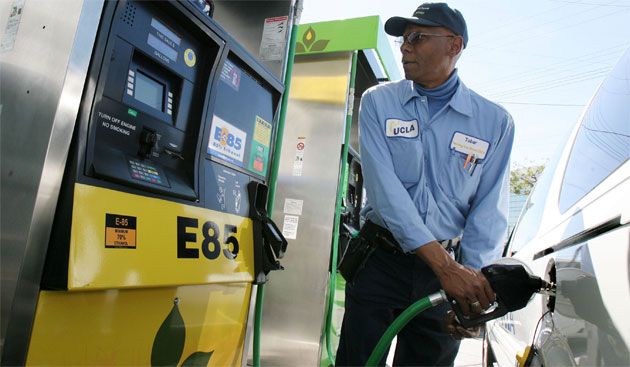
The use of alcohol-based fuels could be a violation of Islamic precepts